What is a bill of lading, and what does it do?
Published on: October 18, 2026
Understand the document that links receipt of cargo, sea carriage and delivery.
A bill of lading, commonly abbreviated to B/L, is an important document in seaborne trade. It is generally issued by a carrier or its agent and records the receipt or loading of goods, together with the relevant transport information.
A bill of lading first serves as a cargo receipt. It usually records information such as the description, number of packages or weight, and ports of loading and discharge. However, goods received for shipment and goods already loaded on board represent different stages, so the wording matters. The cargo description is also not a comprehensive certification by the carrier of the goods’ internal quality.
It can also serve as evidence of the contract of carriage. It reflects the transport relationship between carrier and shipper and sets out or incorporates the relevant conditions of carriage. The sale of goods and their transportation are connected but distinct: the sales contract deals with the commercial transaction, while the bill of lading mainly concerns carriage and delivery of the cargo.
Certain types of bill of lading also support delivery against the document and transfer during trade. An order bill of lading, for example, may be transferred by endorsement and other applicable requirements, allowing trading and settlement arrangements to continue while the cargo is in transit. Transfer and delivery requirements differ by document type. Holding a photocopy alone does not establish a right to collect the goods.
A sea waybill is also used for ocean transport, but it is not the same document. It normally names a specific consignee, does not have the negotiability of a negotiable bill of lading, and generally does not require presentation of an original sea waybill for delivery. The document used affects how cargo is handed over at destination.
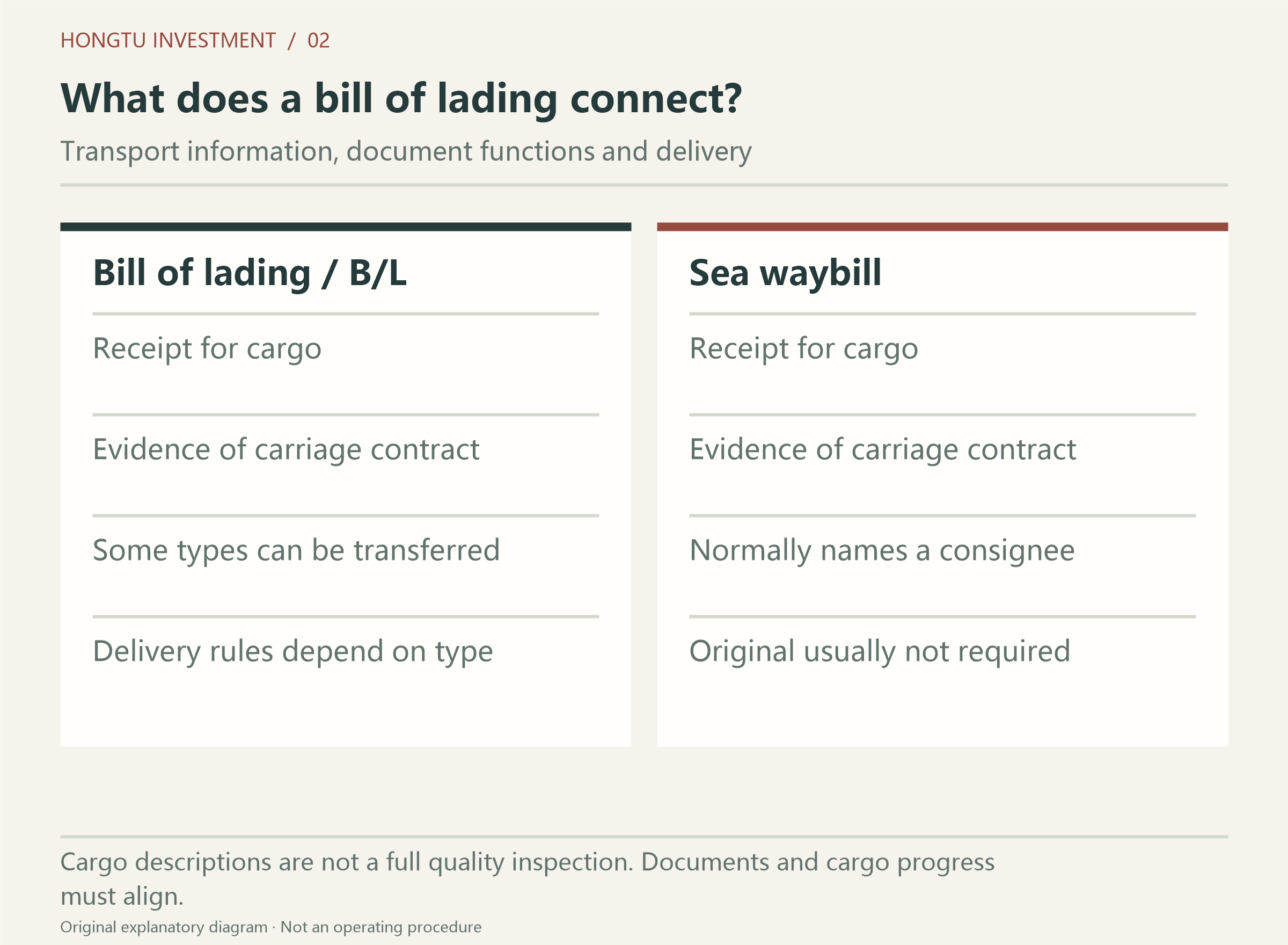
Bills of lading and sea waybills both record transport information, but transferability and delivery requirements differ.
For example, a shipment may have reached port while the transport documents or cargo release arrangements remain incomplete. The consignee may still be unable to collect it. Physical transport and document processing therefore need to progress together.
To understand a bill of lading, look at which cargo it identifies, what carriage arrangements it records and what delivery requirements apply. It carries transport information and forms an important link between dispatch, carriage and receipt.
References