Bulk shipping and container shipping: what is the difference?
Published on: October 30, 2026
How cargo form, shipment size and facilities shape the way goods are transported.
Grain, ore and coal can be loaded directly into a ship’s hold, while machinery and bagged materials often travel in containers. The difference between bulk and container shipping begins with how the goods are loaded and how transport and handling are organised.
Dry bulk shipping generally involves loading large quantities of unpackaged solid material directly into a ship’s hold. Grain, coal and iron ore are common examples. Loading and discharge use conveyors, grabs or other equipment suited to the cargo, and ports need appropriate receiving and storage facilities.
Container shipping uses standardised boxes as transport units. Once packed, goods can move with the container between ships, trains and trucks, reducing the need to handle individual items at each transfer. General-purpose, refrigerated and tank containers serve different storage and transport requirements.
A commodity is not necessarily limited to one method. Grain, for example, can move as a large bulk shipment or in containers, depending on volume, packaging and destination facilities. The choice often depends on cargo characteristics, shipment size, route and facilities at both ends, rather than the commodity name alone.
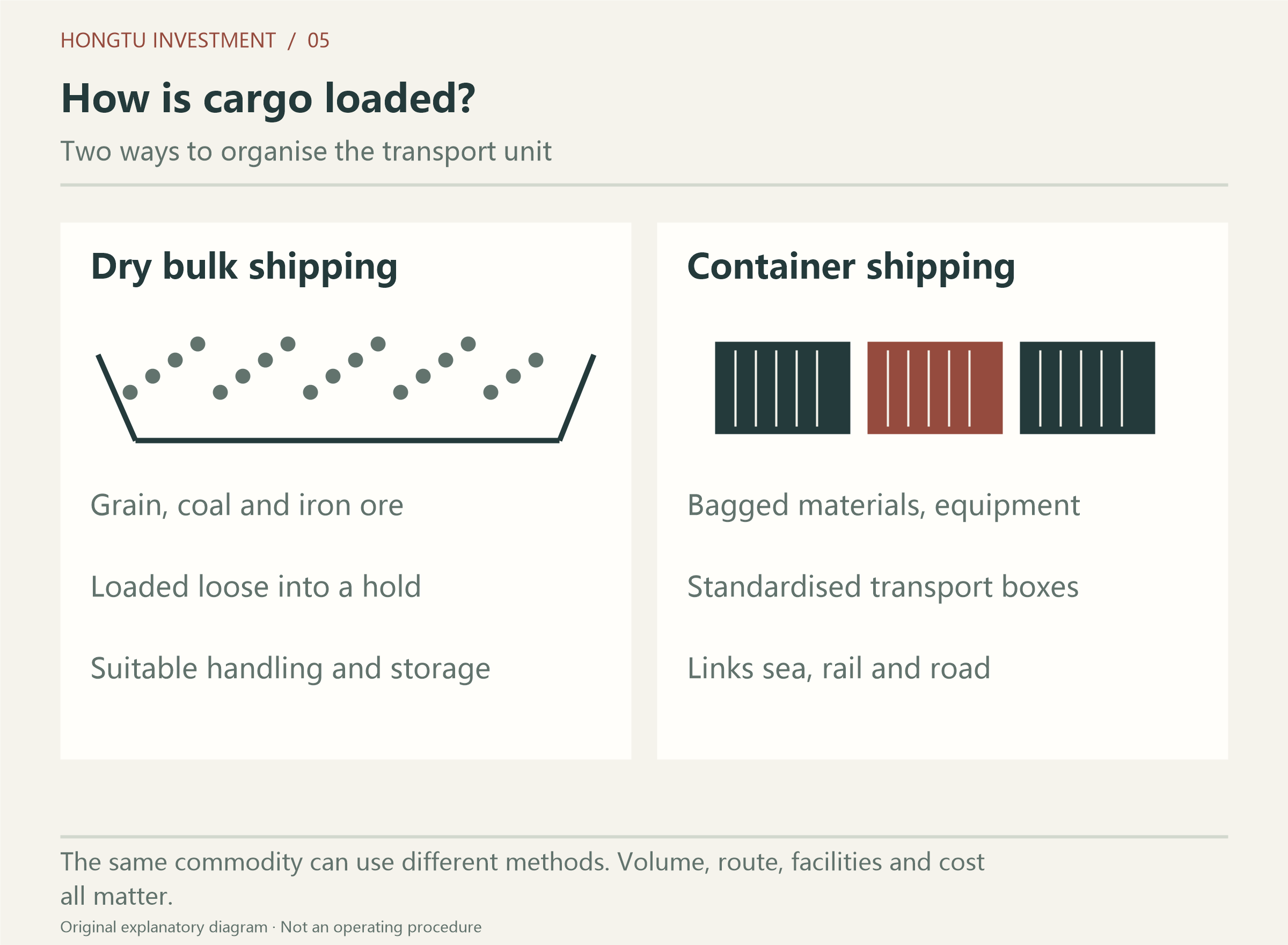
Dry bulk is loaded directly into holds; containerised goods move in boxes. A commodity is not restricted to one shipping method.
Large, concentrated volumes may suit bulk carriers, while smaller, dispersed consignments that connect several modes of transport may use container networks. Neither method is always cheaper: handling, port charges, container availability and inland transport also affect the overall cost.
Not all goods shipped outside containers are bulk cargo. Steel products and large equipment handled as individual pieces are often described as breakbulk cargo. Crude oil, chemicals and liquefied gases use vessels and equipment suited to their particular properties. LNG shipping relies on specialised cryogenic cargo systems and cannot use ordinary dry bulk handling methods.
For the recipient, the transport method affects more than the sea voyage. It also influences where the cargo can be received, the equipment needed to unload it and the onward delivery arrangements. Understanding these facility requirements helps explain whether a route can connect effectively to the final point of use.
References