Cargo insurance and carrier liability: how do they differ?
Published on: October 26, 2026
Separate the carrier’s obligation to compensate from the protection provided by an insurance policy.
When goods are damaged or lost in transit, two questions often arise: must the carrier pay compensation, and does cargo insurance provide cover? Both may respond to the same loss, but their basis and scope are different.
Carrier liability arises under the applicable transport rules and contract of carriage. Whether compensation is due depends on the cause of loss, where it occurred and the relevant rules. Damage occurring while goods are in a carrier’s custody does not automatically mean the carrier must reimburse their full value.
In many transport arrangements, compensation is also subject to liability limits, which may be calculated by cargo weight or package count. These limits are not the same as the sales value of the goods. The gap can be particularly easy to overlook for cargo that is light but valuable.
Cargo insurance provides protection under an insurance contract. The insurer considers whether the loss falls within the agreed cover and applies conditions such as the sum insured, deductible and exclusions. The risks it can cover do not depend solely on whether the carrier is liable.
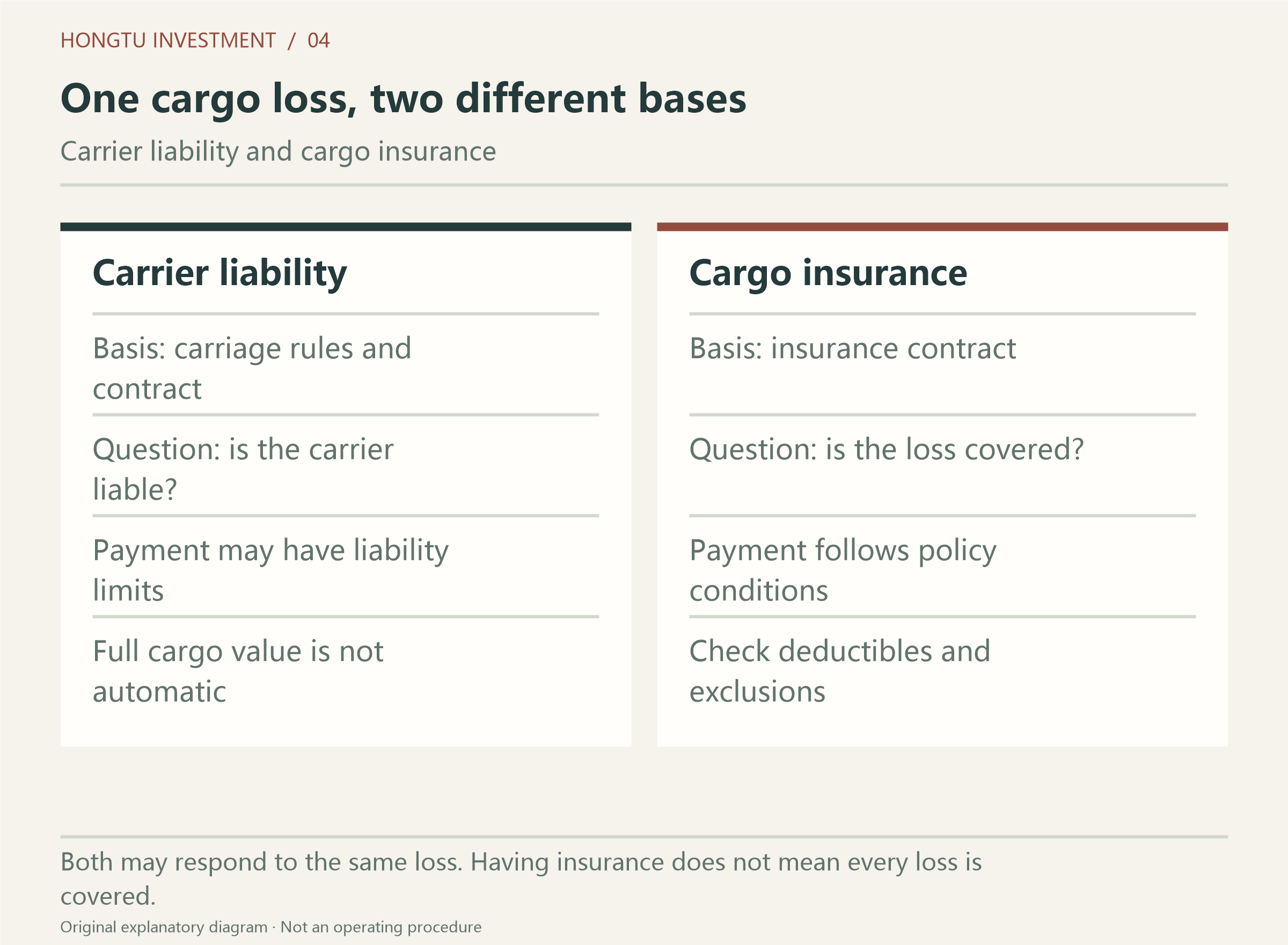
Carrier liability and cargo insurance differ in their basis, assessment and compensation scope.
For example, an accident may damage goods and leave the carrier liable, but subject to a compensation limit. If the loss is covered by cargo insurance, the policy determines the insurance payment. Conversely, buying insurance does not mean every loss is covered. Loss caused by delay or deterioration arising from the goods’ own characteristics calls for particular attention to policy restrictions.
CIF, discussed in the earlier series, includes an obligation for the seller to arrange cargo insurance. Under the normal Incoterms® 2020 rules, however, CIF requires a limited level of cover by default. “Insured” should not be read as meaning that every transport risk is covered.
Freight charges, carrier liability and insurance premiums therefore relate to different things. Freight pays for transport services; carrier liability addresses losses for which the carrier is responsible under law or contract; cargo insurance provides protection within an agreed scope. Keeping these separate makes it easier to understand the protection included in a shipment.
References