CIF: How Freight, Insurance and Risk Are Allocated
Published on: October 4, 2026
Why the seller pays freight and insurance to the destination port while cargo risk normally passes at the port of shipment.
Based on normal Incoterms® 2020 arrangements
CIF stands for Cost, Insurance and Freight. It applies to sea and inland waterway transport and is a common basis for quotations in international goods trade.
Under CIF, the seller handles export clearance and loading, arranges transport to the agreed destination port, and pays the corresponding freight and cargo insurance costs. The buyer does not need to organise this sea transport, but remains responsible for import clearance, associated duties and taxes, and transport beyond the destination port.
The most frequent source of confusion with CIF is that the seller’s cost responsibilities and the transfer of risk do not end at the same place. Although the seller pays freight to the destination port, cargo risk normally passes to the buyer when the goods are on board at the port of shipment. Paying for sea transport does not mean that the seller bears cargo risk throughout the voyage.
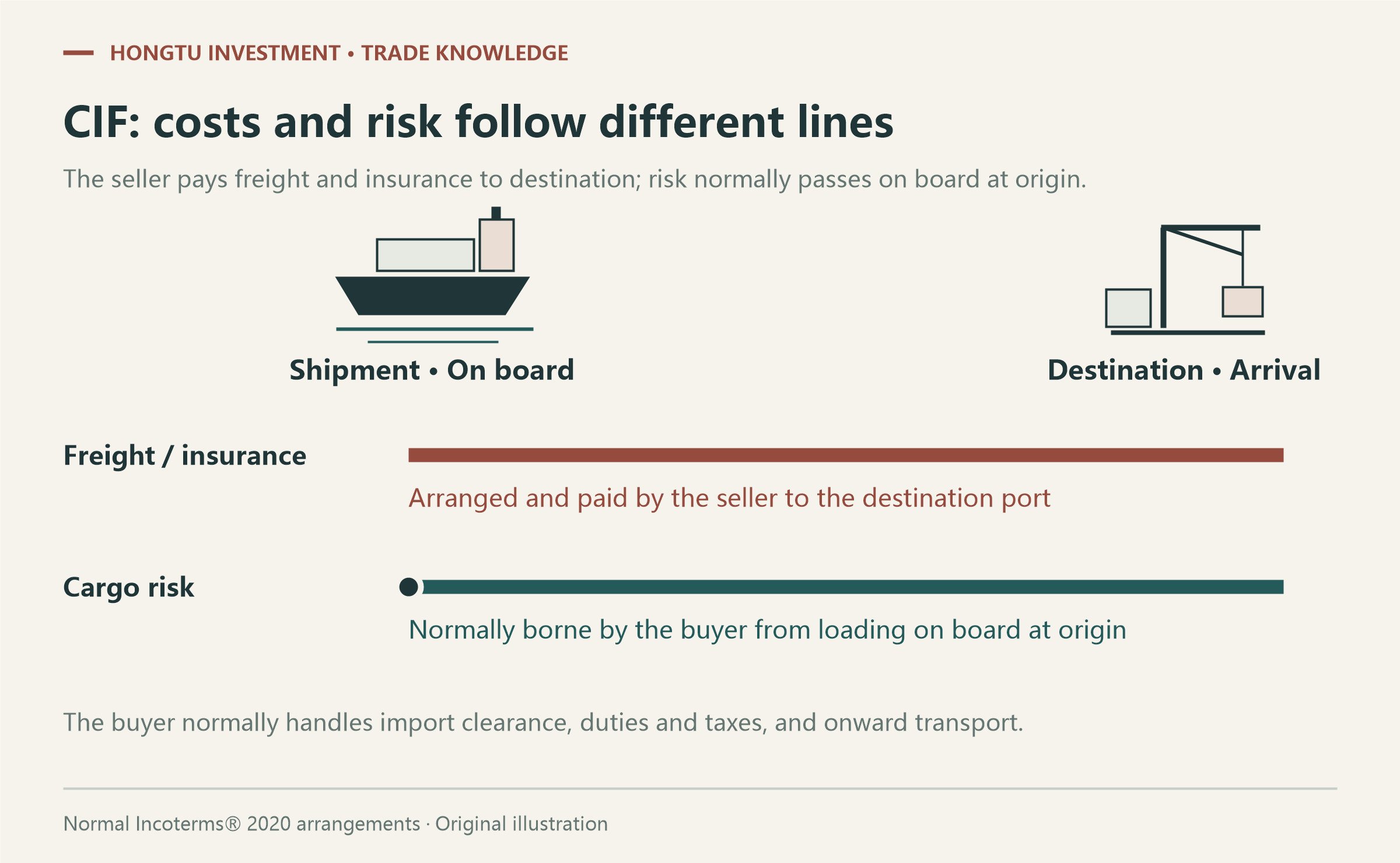
Under CIF, the seller pays freight and insurance to destination, while risk normally passes on board at origin.
Insurance is therefore an important part of CIF. The cargo policy obtained by the seller provides agreed cover for risks borne by the buyer during transport. CIF requires a minimum level of insurance cover by default, however, and its scope is limited: not every loss is covered. The parties may agree on wider cover.
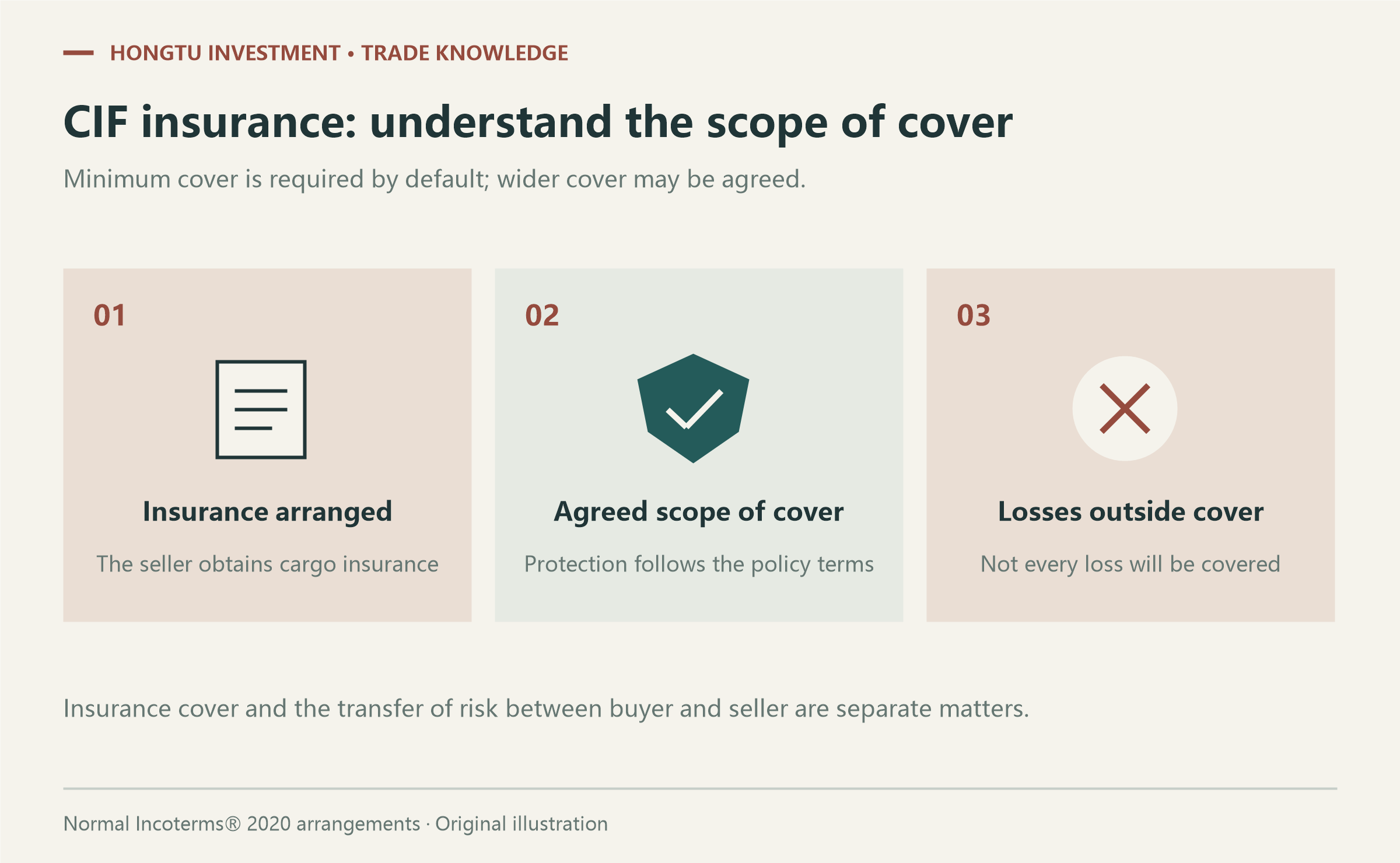
CIF requires minimum insurance cover by default; not every loss is covered.
A CIF price includes freight and insurance to the destination port, but does not cover every expense after arrival. Import duties and taxes, customs clearance and onward delivery are generally for the buyer’s account. Whether destination unloading charges are already included depends on the terms of the transport arranged by the seller.
Compared with FOB, the main difference is that the seller arranges sea transport and insurance. The normal point at which risk transfers does not move further along the journey.
References