Customs declaration and clearance: what is the difference?
Published on: October 22, 2026
Why submitting a declaration, obtaining release and collecting goods are different stages.
In import and export business, customs declaration and customs clearance often appear in the same conversation. They are closely related, but everyday usage emphasises different things. Declaration focuses on reporting goods to customs and handling the associated formalities; clearance usually describes the wider process of completing the relevant customs procedures.
One central task is to tell customs what goods are entering or leaving. The product description, quantity, value and origin help identify the cargo and provide a basis for regulatory checks. Eligible importers or exporters may handle the declaration themselves or appoint a customs broker.
Submitting a declaration does not mean the goods have been released. Customs must review the shipment according to its characteristics and the applicable requirements. This can involve additional information, inspection and the handling of duties and taxes. Not every shipment undergoes the same checks, and processing time varies with the goods, documentation and actual regulatory circumstances.
In business communication, “undergoing clearance” usually covers a period from declaration to completion of the relevant procedures. Declaration is therefore an important part of clearance, rather than a separate, unrelated procedure. “Declared” and “cleared” cannot simply be used interchangeably.
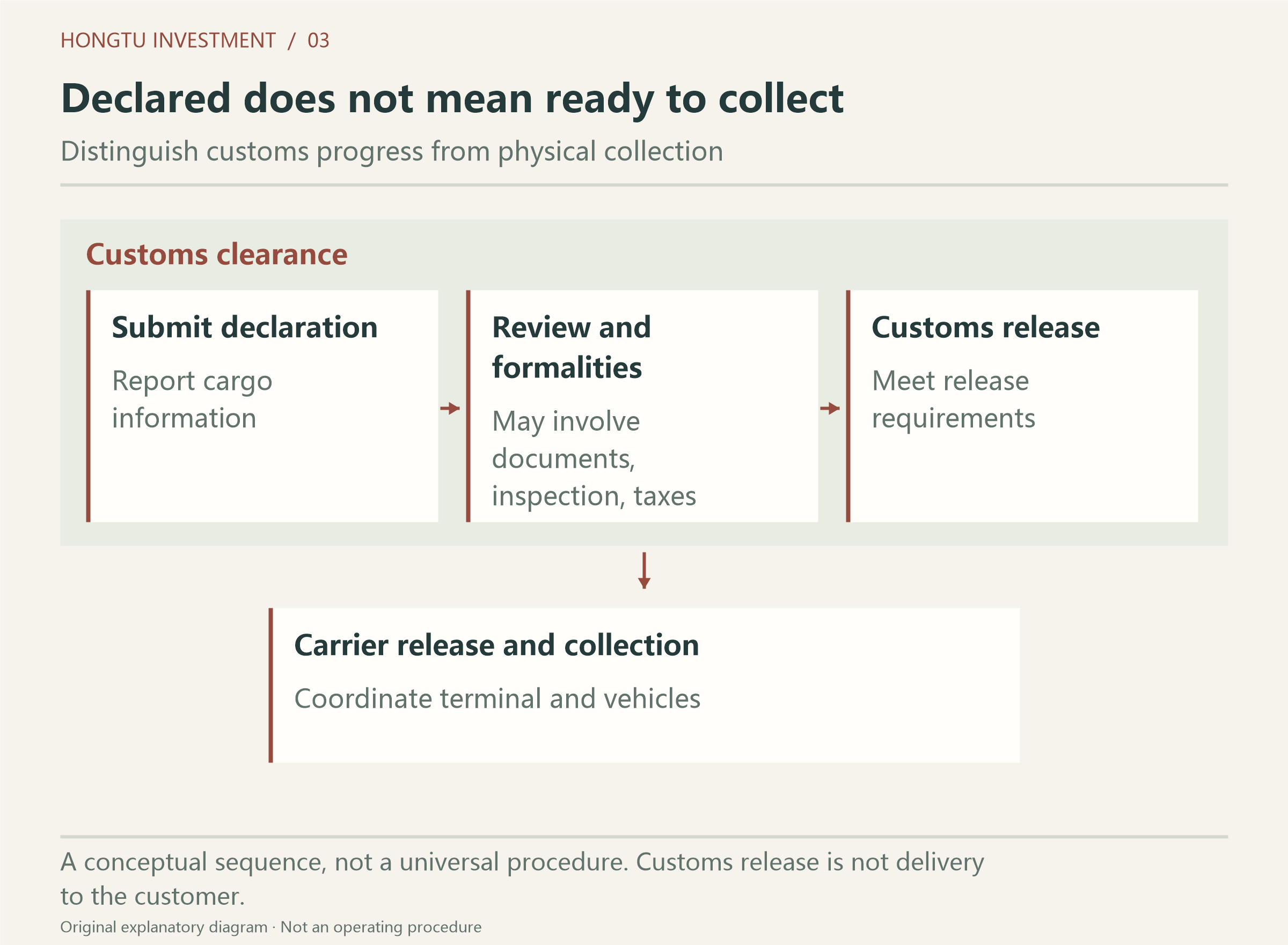
Declaration is part of clearance. After customs release, collection still needs carrier, terminal and transport coordination.
For example, goods may have been declared but still be awaiting review or further information. They have been declared, but this alone does not establish that all import formalities are complete. Goods subject to inspection, quarantine or other controls must also be understood in the context of those requirements.
Customs release and physical collection are also different. Even after customs has released the cargo, carrier release, terminal operations and collection vehicles may still need to be coordinated. “Clearance completed” does not mean the goods have left the port or reached the customer’s warehouse.
Businesses sometimes use these terms loosely. When checking progress, identifying whether goods have been declared, are awaiting review or inspection, or have been released gives a clearer picture than simply saying that they are undergoing clearance.
References
This article explains common business terminology, without prescribing deadlines or documentation requirements.