DDP: Understanding Delivered Duty Paid
Published on: October 8, 2026
An introduction to delivery at destination with transport, import clearance and related duties and taxes handled by the seller.
Based on normal Incoterms® 2020 arrangements
DDP stands for Delivered Duty Paid. It is one of the Incoterms® rules that places extensive delivery obligations on the seller, and can be used for sea, rail, road, air or multimodal transport.
Under DDP, the seller transports the goods to the agreed destination, handles export, any necessary transit and import formalities, and bears the associated duties, taxes and charges. The destination may be the buyer’s warehouse or another agreed place.
DDP delivery takes place at destination. The seller completes delivery when the goods have been cleared for import and are available to the buyer at the agreed place on the arriving means of transport, ready for unloading. In the normal course of performance, the seller bears cargo risk during transport up to that point.
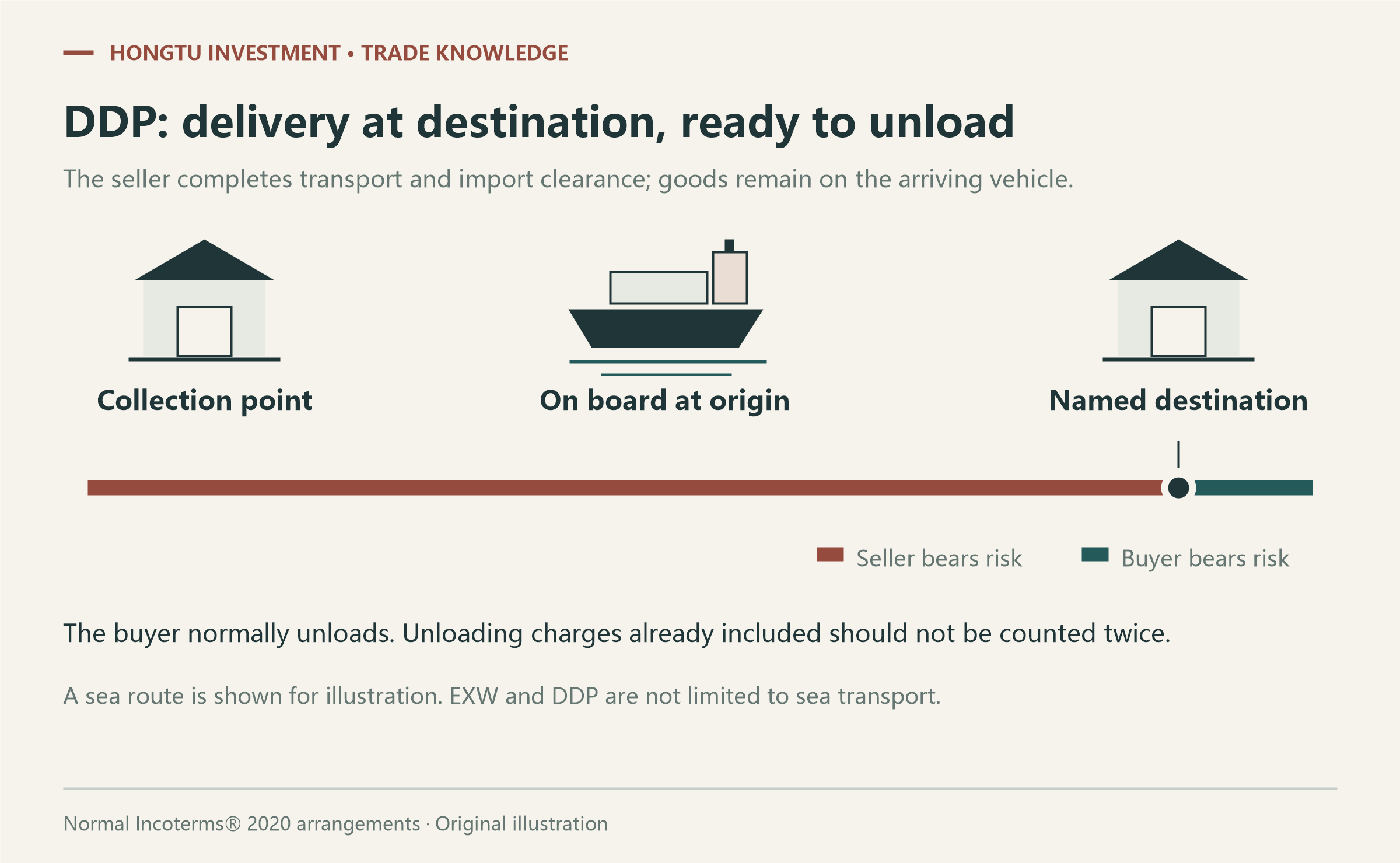
DDP delivery normally occurs at destination, cleared for import and ready for unloading.
This is an important distinction between DDP and CIF. Both may involve the seller arranging international transport, but under CIF cargo risk normally passes when the goods are on board at the port of shipment. Under DDP, it stays with the seller until delivery at the agreed destination.
Delivered Duty Paid does not automatically include unloading. Unloading is generally the buyer’s responsibility; where the seller’s transport arrangements already include the unloading charges, they should not be counted again. The buyer must also assist with relevant information or documents needed for formalities and receive the goods as agreed.
For the buyer, having the seller coordinate transport and import formalities can reduce the arrangements it needs to manage itself. In turn, the seller needs to understand customs and tax requirements at destination and be able to complete delivery there.
References