FOB: Delivery On Board at the Port of Shipment
Published on: September 30, 2026
How FOB divides export arrangements, sea transport and cargo risk at the port of shipment.
Based on normal Incoterms® 2020 arrangements
FOB stands for Free On Board. It applies to sea and inland waterway transport and is commonly used in commodity trades such as grain, minerals and energy products.
Under FOB, the seller brings the goods to the agreed port of shipment, completes export formalities and loads them on the vessel nominated by the buyer. The buyer is chiefly responsible for arranging sea transport, paying freight, and handling import clearance and onward transport after arrival.
Delivery takes place on board the vessel at the port of shipment. In the normal course of delivery, the seller fulfils its delivery obligation when the goods are on board, and the risk of loss or damage passes to the buyer at that point. Simply bringing the goods to the port or terminal does not normally complete FOB delivery.
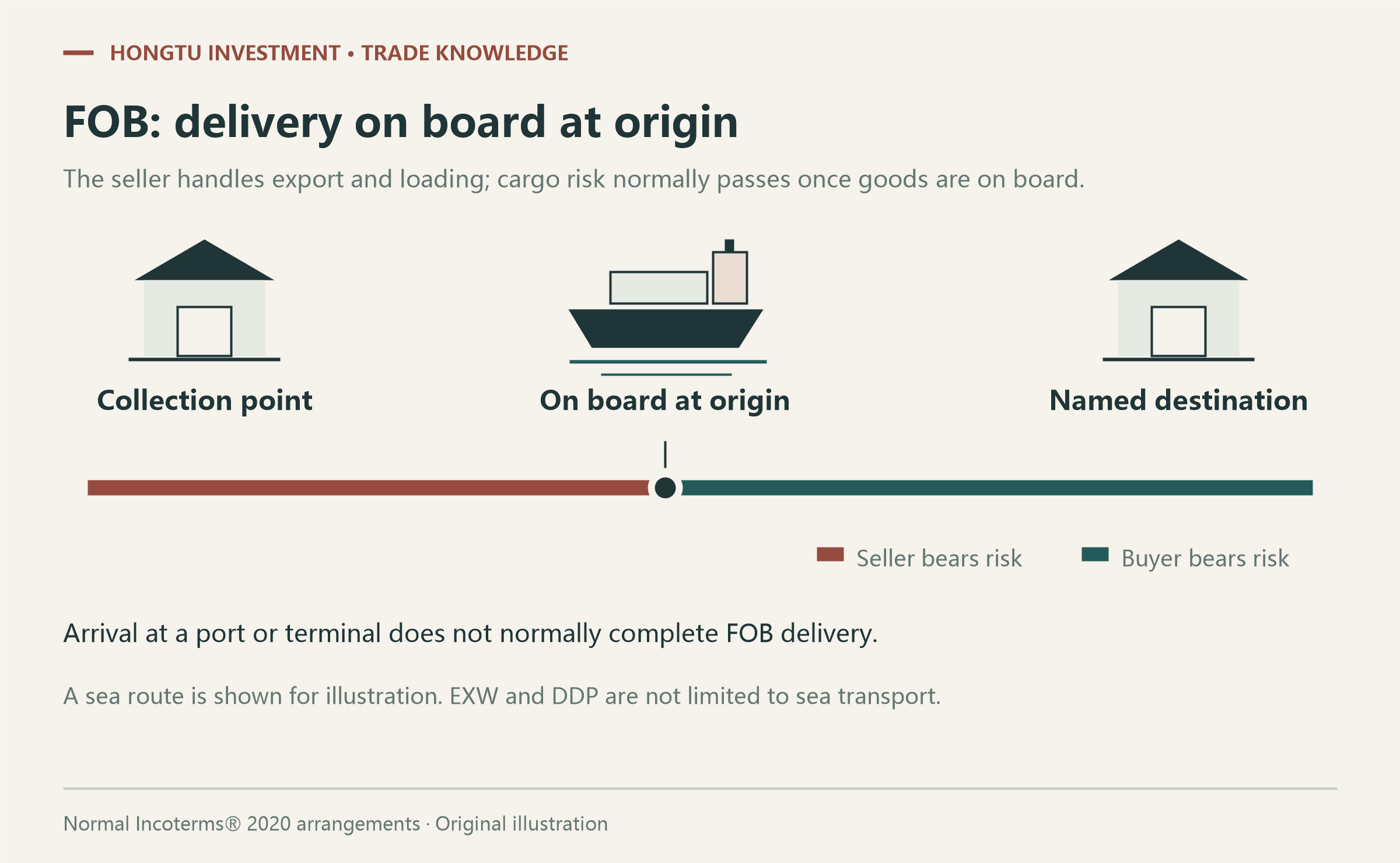
FOB risk normally passes when goods are on board at the port of shipment.
This arrangement gives the buyer a direct role in organising sea transport. The buyer arranges the vessel or cargo space and generally coordinates the route, freight costs and arrival schedule. For buyers with shipping resources and multiple consignments to manage, FOB allows sea transport to be organised centrally.
FOB does not itself require the seller to purchase insurance for the sea voyage. As the buyer normally bears cargo risk from the time the goods are on board, marine cargo insurance becomes part of the buyer’s transport considerations.
The suitability of FOB also depends on how the goods are actually handed over. Loading bulk goods directly onto a vessel fits the FOB delivery model well. Containerised goods, by contrast, are often handed to a terminal or carrier before they are loaded on board. In that situation, FCA—Free Carrier—is usually considered a closer match to the actual handover process.
References