How imported goods travel from supplier to customer
Published on: October 14, 2026
Follow the journey from overseas preparation and shipment to customs clearance and domestic delivery.
Goods moving from an overseas supplier to a domestic customer typically pass through preparation, export, international transport, import clearance and local delivery. Trade terms allocate responsibilities between buyer and seller; these stages describe the physical journey of the goods.
Before shipment, the supplier prepares the goods to meet the agreed requirements. The parties involved arrange transport and prepare documents such as commercial invoices and packing lists. Documentation varies by commodity: quantity and weight records for bulk cargo differ from those for boxed goods. The cargo, documents and transport arrangements need to correspond so that each stage can connect with the next.
At origin, goods move by local transport to a port or other departure point, undergo export formalities and are loaded according to the shipping plan. The agreed delivery arrangements determine who books transport, pays freight and handles export procedures. Under FOB and CIF, for example, the main sea carriage is normally arranged by the buyer and seller respectively.
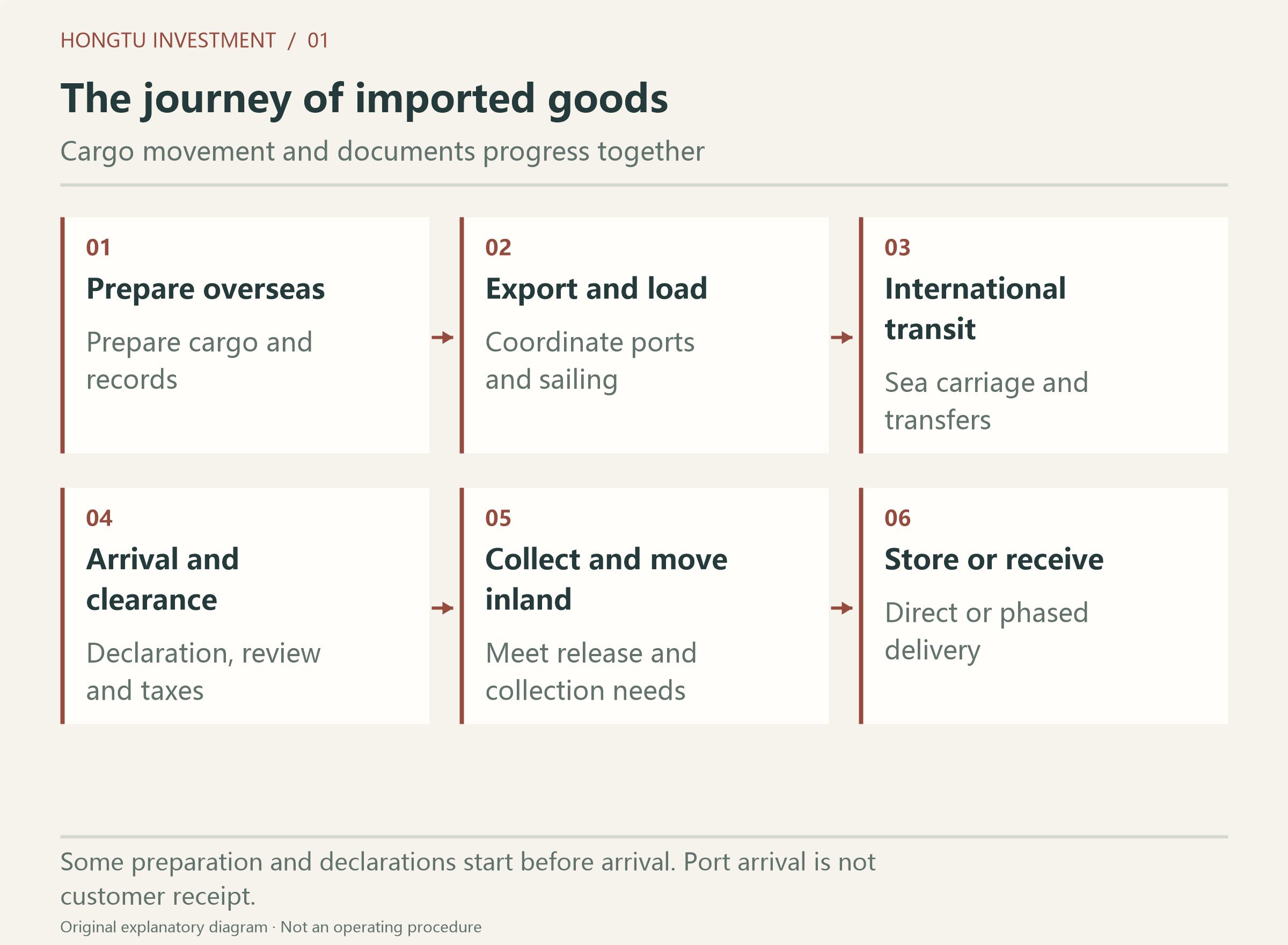
Six stages connect overseas preparation with domestic receipt. Some documentation and declarations can begin before arrival.
International transport takes the cargo from the exporting location to the importing location. Commodities often move by sea, sometimes combined with rail or road transport. Transit time at sea is only part of the schedule: port operations, transshipment and weather can also affect arrival.
After arrival, the cargo must complete the relevant import procedures, including declaration, customs review, any required inspection and the handling of duties and taxes. Some preparation and declarations can take place before arrival, so these activities do not always begin and end in a strict sequence. A vessel arriving in port does not mean its cargo is ready to leave the terminal.
Once customs release and cargo collection requirements have been met, the goods move inland to a warehouse, processing plant or another agreed location. Some are stored and delivered in batches as customers need them; others go directly to the point of use. For the domestic recipient, the expected port arrival date and the date the goods can actually be received may therefore differ.
A shipment passes through several handovers between overseas procurement and domestic supply. Understanding these stages helps distinguish goods that have been shipped, arrived at port, been released or been delivered.
References