EXW, FOB, CIF and DDP: Four Common Trade Terms Explained
Published on: September 22, 2026
An introduction to how four common trade terms divide delivery, transport costs and cargo risk between buyer and seller.
Based on normal Incoterms® 2020 arrangements
International trade quotations often include abbreviations such as EXW, FOB, CIF or DDP. The same product quoted under different trade terms may come with different costs and delivery arrangements.
These terms form part of the Incoterms® rules developed by the International Chamber of Commerce. They provide a common framework for allocating responsibilities for delivery, transport, insurance and customs clearance, as well as the risk of loss of or damage to goods.
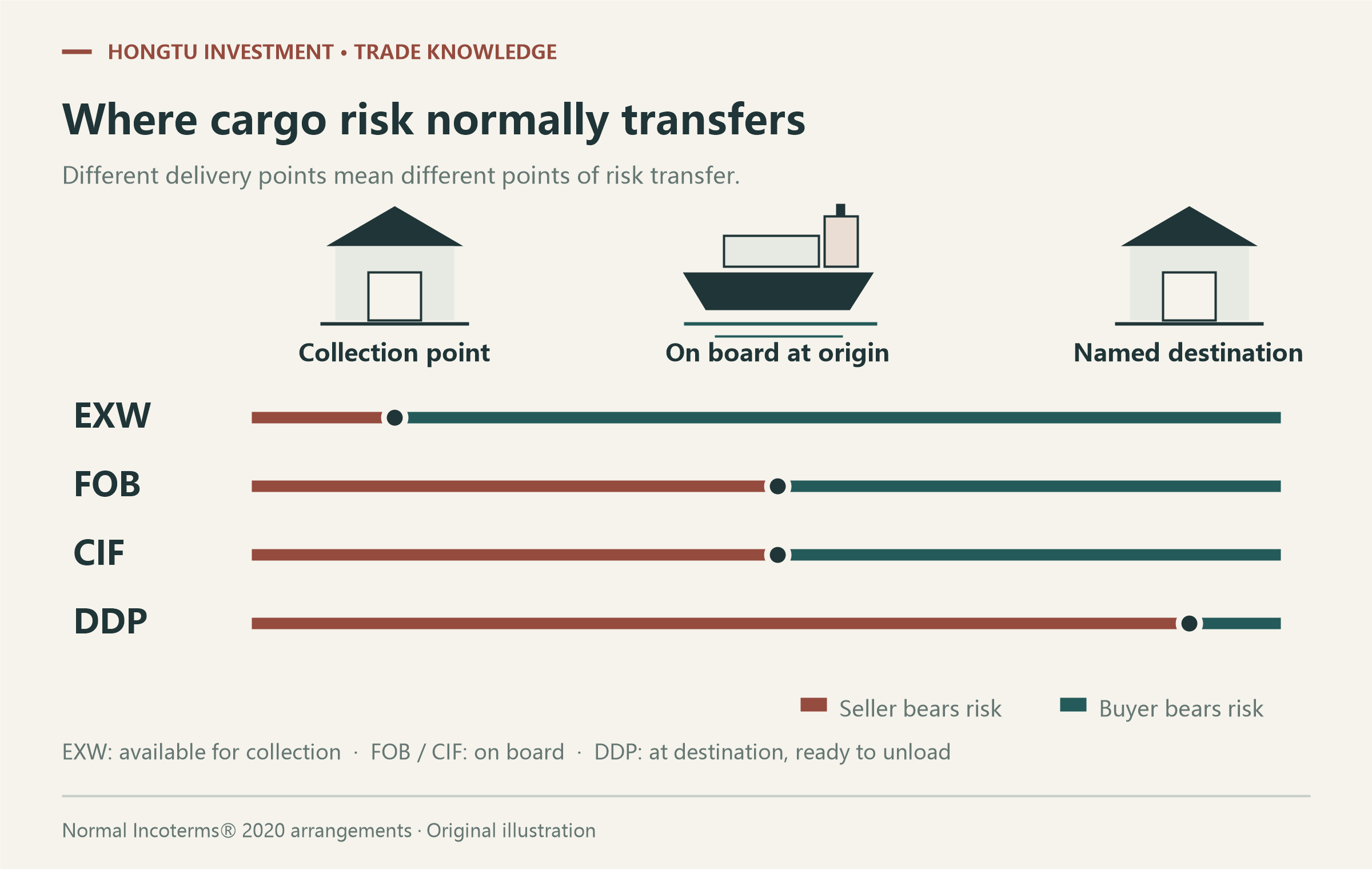
The normal points of cargo risk transfer under EXW, FOB, CIF and DDP.
EXW: Ex Works
The seller makes the goods available for collection at an agreed factory, warehouse or other location. The buyer generally takes responsibility for loading, onward transport and export and import formalities. Of these four terms, EXW places the fewest delivery obligations on the seller and leaves more stages of the journey to the buyer.
FOB: Free On Board
The seller clears the goods for export and loads them on the vessel nominated by the buyer. Risk normally transfers to the buyer once the goods are on board at the port of shipment. The buyer is then chiefly responsible for sea transport and import arrangements.
CIF: Cost, Insurance and Freight
Alongside export clearance and loading, the seller arranges and pays for freight and cargo insurance to the agreed destination port. However, CIF normally transfers risk at the same point as FOB: when the goods are on board at the port of shipment, rather than when they reach the destination port.
DDP: Delivered Duty Paid
The seller transports the goods to the agreed destination, completes import clearance and pays the associated duties and taxes. Delivery takes place when the goods are available to the buyer on the arriving means of transport, ready for unloading. Unloading is generally the buyer’s responsibility.
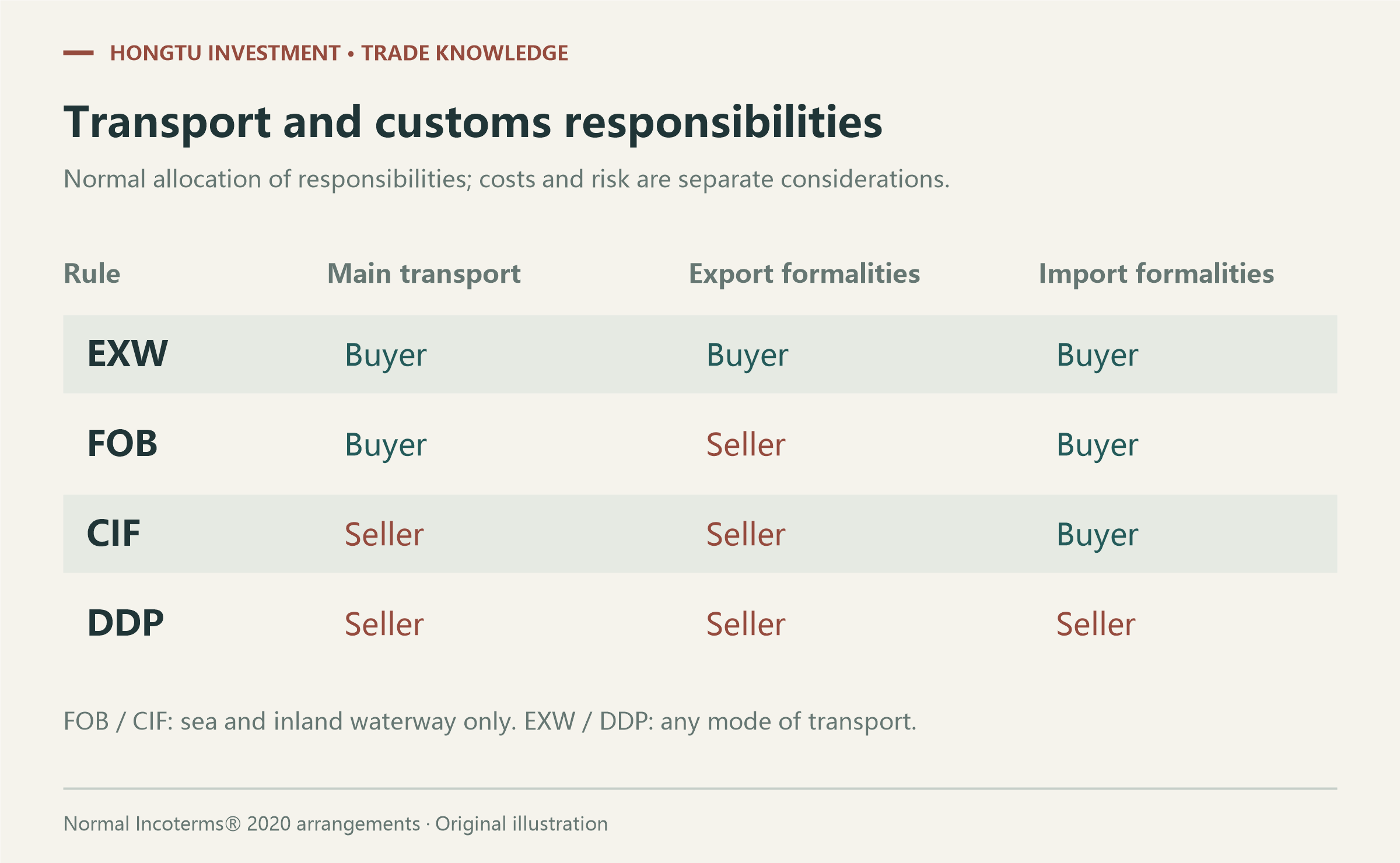
Who normally arranges main transport and export and import formalities under each rule.
FOB and CIF apply to sea and inland waterway transport, while EXW and DDP can be used with any mode of transport. Each term represents a different allocation of transport, customs and cost responsibilities. Comparing quotations therefore also means understanding the scope of delivery included in each price.
References