Port of loading, destination port and place of delivery
Published on: November 3, 2026
Distinguish the transport route from the point at which the seller completes delivery.
A sea freight quotation or transport document often names several locations. The port of loading, destination port and place of delivery may coincide, or they may be far apart. They describe different points in the transport route and delivery arrangements.
The port of loading is where goods are put on board for the relevant sea leg. They may already have travelled from a factory by road or spent time in port storage, so this is usually not the starting point of their entire journey.
The destination port generally refers to the port reached by the agreed sea carriage. Transport documents also commonly identify a port of discharge, where the goods are unloaded from the vessel. If the cargo then travels to an inland warehouse or factory, its journey continues after the sea leg ends.
The meaning of place of delivery depends on context. Between buyer and seller, it concerns where the seller fulfils the delivery obligation. On a bill of lading or other transport document, it may identify where the carrier delivers the cargo to the consignee. A location on a transport document cannot simply replace the delivery arrangements in the sales contract.
Consider goods loaded overseas, discharged at a domestic port and then sent to a factory. The port of loading is overseas, the destination port is domestic, and the factory is the end of the onward transport leg. Where the seller completes delivery still depends on the trade term used.
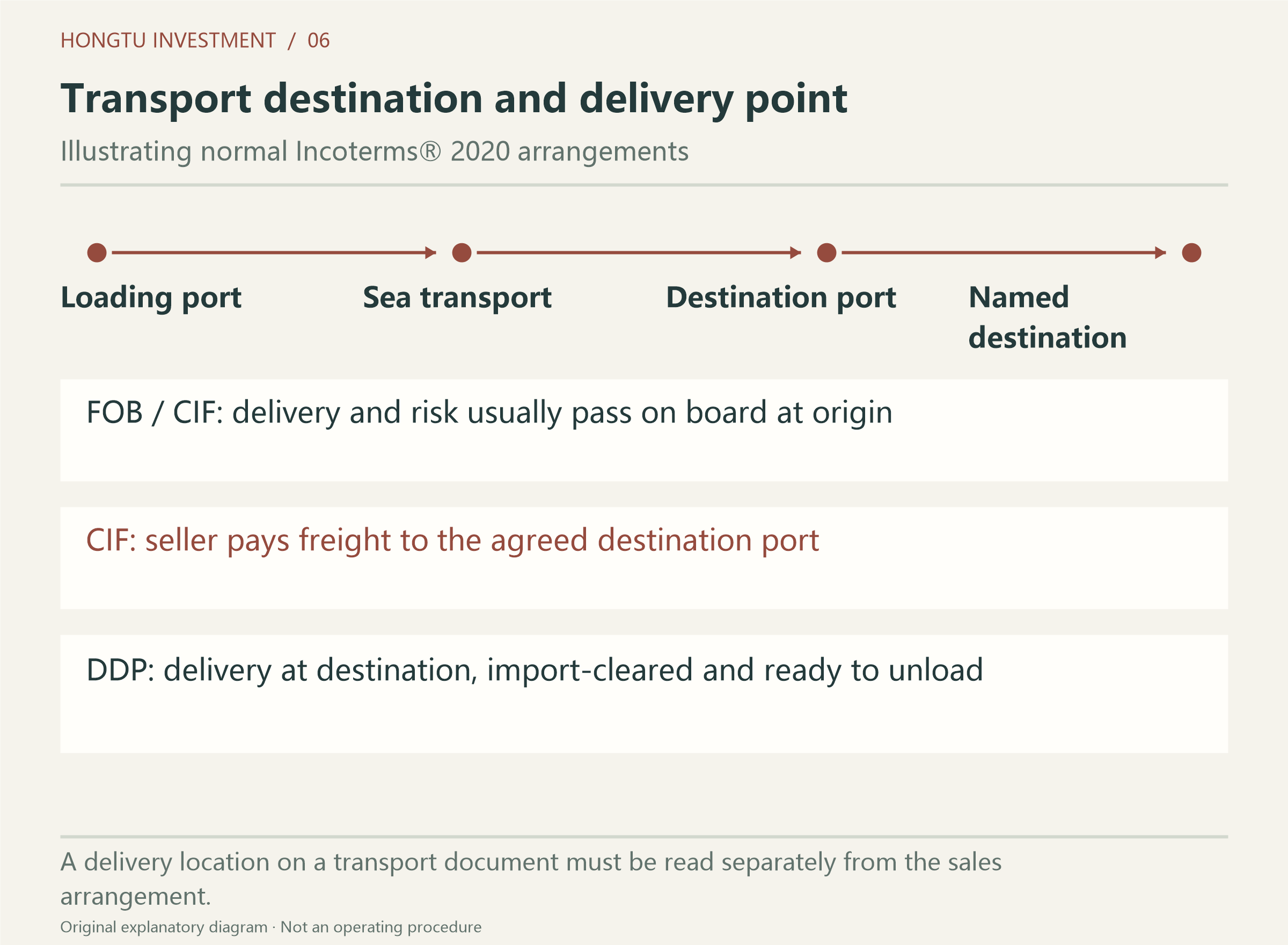
CIF freight extends to the destination port, but risk normally passes on board at origin. DDP delivery is at the named destination.
Under the normal Incoterms® 2020 rules, FOB and CIF delivery and risk transfer generally occur when goods are on board at the port of shipment. Although CIF names a destination port and requires the seller to pay freight to it, the delivery point does not move there. Under DDP, delivery occurs at the named destination when the goods have been cleared for import and are available to the buyer on the arriving vehicle, ready for unloading.
When reading a port name or address, establish whether it identifies a loading point, transport destination or agreed place of delivery. This keeps the point to which freight is paid separate from the point at which delivery takes place.
References